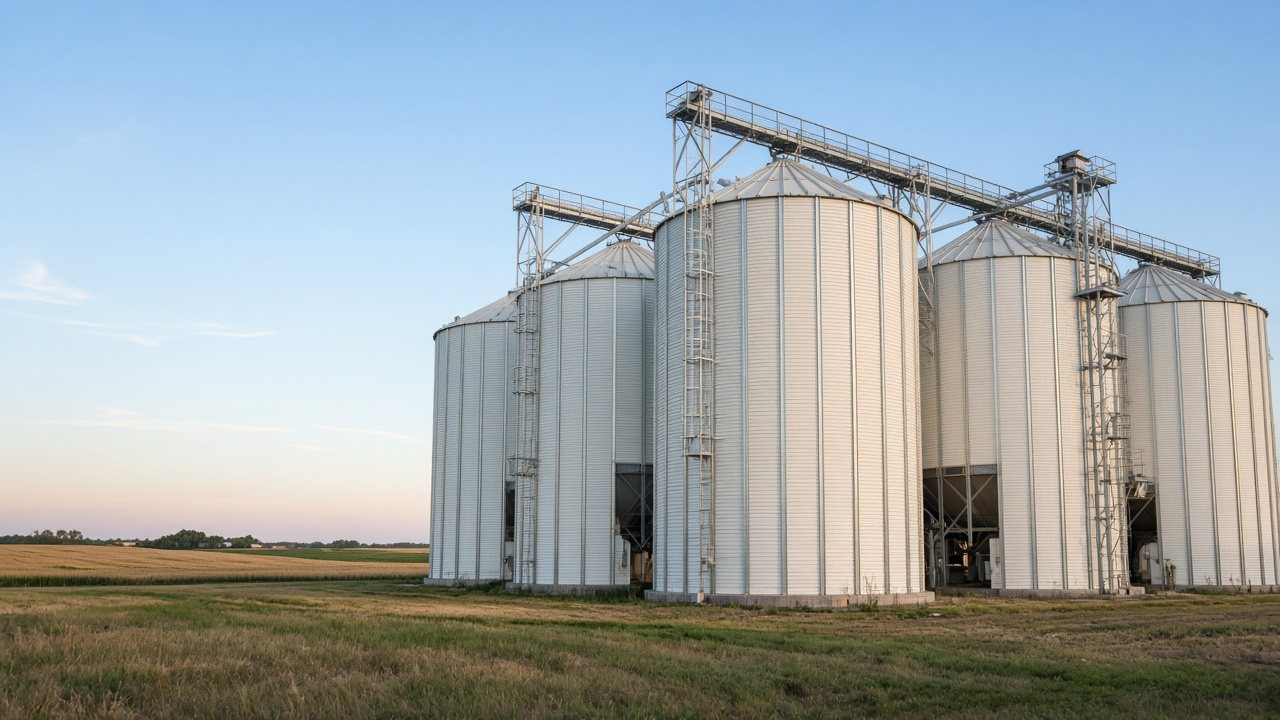
We paint silos and bins in Kansas City, steel or concrete, by cleaning the outside shell with power washing or sandblasting, priming bare and rusted areas, and applying exterior coatings from boom trucks and lifts.
Silos, bins and tanks we paint
Silo painting covers the outside of the structure and the steel attached to it:
- Steel silos and bins
- Concrete silos
- Exterior shells and roofs
- Ladders, cages and catwalks
- Legs, skirts and support steel
The steel around a silo, such as conveyor supports and access platforms, is a close cousin to plant steel. The structural steel and equipment painting page covers that work in more depth.
Washing and blasting a silo shell before coating
A silo shell takes weather on every side, and its old coating rarely fails evenly. Some areas only need cleaning, and others have rust and loose paint that must come off. Preparation follows the condition of each area.
Power washing takes off dirt, grain dust film and chalky, loose paint. Where rust and failed coating have to come off, abrasive blasting is the step that does it. OSHA's fact sheet describes abrasive blasting as driving a high velocity stream of abrasive at a surface, with compressed air or water, to clean it or prepare it for paint. The written preparation standards, as the American Galvanizers Association summarizes them, run from tool cleaning of loose rust up to blast cleaning to bare metal, and the coating chosen for the shell sets which grade it needs.
The reason for all of it is the same on a silo as on any steel: a Federal Highway Administration study of bridge steel describes preparation as removing contaminants and creating a roughness the coating can grip. The surface preparation page explains washing and blasting in full.
Coatings for steel silos and bins
A steel silo is a textbook case of one condition federal rules list for industrial maintenance coatings: exterior exposure of a metal structure (40 CFR 59.401). Coatings in that category are built for harder service than ordinary building paint.
The layered approach used on steel bridges carries over. In the system the federal bridge study describes as typical, a zinc-rich primer protects the steel by corroding in its place, an intermediate coat acts as a barrier, and the topcoat takes the sunlight and keeps the finish from breaking down. On a silo, the topcoat is the layer that faces the sun every day. Bare and rusted patches are primed before the full system goes on. The coating systems guide explains each layer.
Concrete silos: cleaning, sealing joints and coating
Concrete silos are prepared differently from steel. The shell is washed to take off dirt and loose material. Open joints and cracks are repaired and caulked, because water that gets in behind a coating pushes it off from the back. Then the exterior coating goes on. Waterproofing and caulking are part of our work, so the joints and the coating are handled in one job.
Reaching the top with boom trucks and lifts
Silo tops and upper shells are reached with boom trucks and lifts. Two lines from OSHA's aerial lift fact sheet shape how a silo job is planned. First, a lift is not operated in winds higher than its maker recommends, so wind decides some working days. Second, all overhead power lines and communication cables are treated as energized, with at least 10 feet of clearance. Where power lines run near the silo is one of the first questions we ask.
Grain dust, bin entry and other hazards a silo job is planned around
OSHA calls grain handling a high hazard industry. The hazards it names include fires and explosions from grain dust, suffocation from engulfment in bins, falls from heights, and crushing injuries and amputations from equipment. Grain dust is the main source of fuel for explosions in grain handling, and it can burn or explode if enough of it becomes airborne.
Silos and storage bins are also among OSHA's examples of confined spaces. At grain handling facilities, 29 CFR 1910.272 sets its own rules for entry into bins, silos and tanks: an entry permit unless the employer or a representative is present for the whole entry, equipment that presents a danger de-energized and locked out, air testing where a hazard may be present, and an observer stationed outside who is equipped to help.
This page is about painting the outside of silos and bins. If you need interior work, describe it in the quote form and we will tell you whether we can take it.
Scheduling silo painting around receiving and load-out
The work is scheduled to fit the facility's hours, so painting does not collide with trucks coming in or grain going out. The facility's own programs govern the site: under the grain handling rule, the employer keeps a written housekeeping program to reduce grain dust on ledges, floors, equipment and other surfaces, and issues the permits the rule requires. A silo painting plan is built inside those programs, not around them.
Silo painting questions
Is a silo a confined space?
Yes. OSHA lists silos and storage bins among its examples of confined spaces, and its general standard requires the employer to evaluate the workplace and decide which spaces are permit-required.
Do you paint the inside of silos and bins?
It depends on the structure and what it stores. Interior entry is governed by confined space rules and, at grain facilities, by the grain handling rule's entry requirements. Tell us about the job in the quote form and we will say whether we can take it.
Why does grain dust matter to a painting job?
Because it is combustible. OSHA names grain dust as the main fuel for explosions in grain handling, and the facility's housekeeping and permit programs set the conditions for any work on site.
Can you paint a silo while the facility is operating?
Yes, for exterior work scheduled around your hours. Receiving and load-out times go into the plan so the crew and the trucks are not in the same place at once.
Silo cost depends mostly on height, access and how much of the shell needs blasting. The industrial painting cost page explains each factor, and the guide to why industrial coatings fail helps read what an old silo coating is doing. We work across the Kansas City metro service area.
Sources
- OSHA Fact Sheet, Protecting Workers from the Hazards of Abrasive Blasting Materials, FS-3697, September 2014, read 2026-11-28
- OSHA, Confined Spaces, Overview, read 2026-11-28
- OSHA, 29 CFR 1910.146, Permit-required confined spaces, read 2026-11-28
- OSHA, Grain Handling, Overview, read 2026-11-28
- OSHA, 29 CFR 1910.272, Grain Handling Facilities, read 2026-11-28
- OSHA Fact Sheet, Aerial Lifts, April 2011, read 2026-11-28
- American Galvanizers Association, SSPC Surface Preparation Standards, April 30, 2014, updated 2025, read 2026-11-28
- Federal Highway Administration, Coating Performance on Existing Steel Bridge Superstructures, FHWA-HRT-20-065, September 2020, read 2026-11-28
- 40 CFR 59.401, Definitions, Legal Information Institute copy, read 2026-11-28
Get a quote for silo or bin painting
Send photos of the whole structure and of the worst rust, the material (steel or concrete), the rough height and diameter if known, what it stores and where nearby power lines run, through the silo painting quote form.