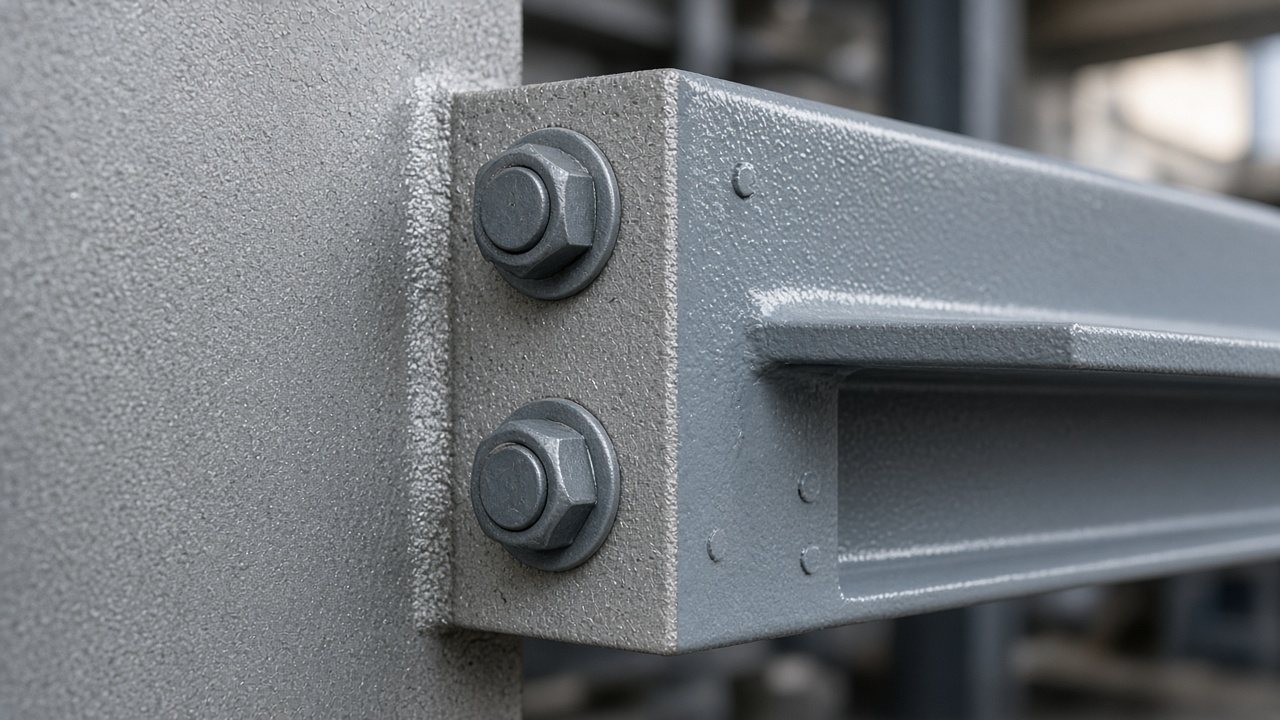
We do industrial power washing and sandblasting in Kansas City as the first step of a coating job: washing takes off dirt, grease and loose paint, and abrasive blasting takes steel down to clean, roughened metal when the coating calls for it.
Power washing: what it removes and when it is enough
Power washing is the lightest preparation and often the first. It takes off dirt, grime, a film of grease, and paint that has gone chalky or come loose. On a building exterior or a sound older coating that only needs a fresh topcoat, washing may be most of the preparation.
What washing does not do is roughen sound steel. A new coating needs something to grip, and a smooth, clean surface is not the same as a prepared one. Even waterjetting, a separate written standard (SSPC-SP 12) that uses jetting at 10,000 psi or higher, does not create a profile on the metal, as the American Galvanizers Association summarizes it. It removes loose rust, loose mill scale and loose coatings, and it can expose a profile that was already there. Ordinary power washing is a lighter cleaning step than that standard.
Sandblasting: what abrasive blasting does to steel
OSHA's fact sheet describes abrasive blasting as the use of compressed air or water to direct a high velocity stream of abrasive material at a surface, to clean it, remove burrs, apply a texture or prepare it for paint or another coating. OSHA's ventilation regulation defines it more broadly as the forcible application of an abrasive to a surface by pneumatic pressure, hydraulic pressure or centrifugal force.
For a coating job, blasting does two things in one pass. A Federal Highway Administration study of bridge steel states the purpose of surface preparation as removing contaminants and creating a specific roughness so the coating can contact and adhere to the steel, and says abrasive blast cleaning achieves both at once. That is why blasting is the usual answer when steel is badly rusted or the old coating has failed.
Blast media: sand, slag, garnet, steel grit and gentler options
"Sandblasting" is the everyday name, but sand is only one of many abrasives. OSHA's fact sheet lists the commonly used ones as silica sand, coal slag, garnet sand, nickel slag, copper slag, glass (beads or crushed), steel shot, steel grit and specular hematite. It also lists alternative, less toxic materials: ice, dry ice, plastic bead media, sponge, baking soda, ground walnut shells, ground corn cob and high pressure water.
The choice, the sheet says, can depend on cost, job specifications, the environment and worker health. Health is a large part of it. Silica sand can cause silicosis, lung cancer and breathing problems in exposed workers, and OSHA's silica page lists abrasive blasting with sand among the activities that expose workers to respirable crystalline silica dust. Steel grit and shot have less potential to cause lung damage, according to the fact sheet. The media for a given job follows the coating specification and the site.
Solvent cleaning comes first: oil and grease
Blasting does not remove oil. Abrasive driven into an oily surface spreads the contamination around, and the coating fails over it later. That is why the first written preparation standard, SSPC-SP 1 Solvent Cleaning, exists: it is meant to remove all visible oil, grease, soil, drawing and cutting compounds and other soluble contaminants from steel. Its listed methods include wiping or scrubbing with solvent, spraying, vapor degreasing, immersion, alkaline cleaners and steam cleaning.
The order shows up in research too. In the federal bridge study, test panels were solvent cleaned to SP 1 first and only then blast cleaned.
Hand and power tool cleaning for spots and small repairs
Not every surface can be blasted, and not every surface needs to be. Three tool cleaning standards cover the rest:
- SSPC-SP 2, Hand Tool Cleaning. Non-powered tools remove loose mill scale, loose rust and loose paint. Anything that cannot be lifted with a dull putty knife is treated as still adherent and stays.
- SSPC-SP 3, Power Tool Cleaning. The same loose material comes off with rotary, impact or power brushing tools, used so they do not leave burrs or sharp ridges, and the edges of adhered paint are feathered.
- SSPC-SP 11, Power-Tool Cleaning to Bare Metal. Power tools take the steel to bare metal, free of visible rust, coating and mill scale, apart from rust at the bottom of existing pits, and leave a surface profile of no less than one mil.
Tool cleaning is the usual choice for spot repairs, small areas, and steel close to equipment that blasting would harm.
How clean is clean enough: the standard named in the specification
Coating specifications and product data sheets name a preparation grade. The common ones, as the American Galvanizers Association summarizes them:
| Standard | Name | What it leaves |
|---|---|---|
| SP 1 | Solvent cleaning | Steel free of visible oil, grease and soluble contaminants |
| SP 2 | Hand tool cleaning | Loose rust, scale and paint removed; tight material stays |
| SP 3 | Power tool cleaning | Same as SP 2, with power tools |
| SP 11 | Power tool cleaning to bare metal | Bare metal, rust allowed only in pit bottoms, profile of at least one mil |
| SP 7 | Brush-off blast | Loose material off, sound coating kept and roughened |
| SP 10 | Near-white metal blast | All visible rust, scale and coating off; staining on no more than five percent of each unit area |
| SP 5 | White metal blast | All coatings, mill scale, rust and foreign matter removed |
The surface preparation standards guide explains each one in plain words, including the waterjetting and galvanized steel standards.
Containing dust and protecting the plant during blasting
Blasting is loud and dusty. OSHA's fact sheet says it can create high levels of dust and noise, and its ventilation regulation explains that both the abrasive and the old coating are shattered into dust that includes particles small enough to breathe. The fact sheet's controls are the backbone of any blasting plan in a plant:
- Barriers and curtain walls to isolate the blasting from other workers
- Restricted areas around blasting that is not fully enclosed
- Exhaust ventilation in containment structures to capture dust
- Cleanup with wet methods or HEPA filtered vacuums, never compressed air
- Blasting scheduled when the fewest workers are at the site
- Avoiding blasting in windy conditions, so hazardous material does not spread
On our side, floors, fixtures and equipment are covered before work starts, tools and materials stay inside the active area, and cleanup is done at the end of each shift. The guide to painting inside an operating plant shows how blasting fits into a zoned schedule.
Blasting old paint that may contain lead
Old coatings deserve a question before anyone blasts them. OSHA notes that lead was used extensively as a corrosion inhibitor and pigment in paints. Its construction lead standard, 29 CFR 1926.62, covers construction work where a worker may be exposed to lead, including the removal or encapsulation of materials that contain it, and the blasting fact sheet says removing lead paint by abrasive blasting will likely require following that standard. Tell us what is known about the old coating, including any test results, before the blasting is priced.
Washing concrete, block and metal siding before paint
Concrete, block and metal siding on plant exteriors are commonly washed rather than blasted. Washing takes off dirt, loose material and chalky paint so the new exterior coating bonds to the wall rather than to a film of grime. Joints and gaps are sealed as part of the same job, since we also do waterproofing and caulking. The industrial plant painting page covers exterior walls and siding, and the silo painting page covers washing and blasting a silo shell.
Surface preparation questions
Is sandblasting always done with sand?
No. OSHA's fact sheet lists slags, garnet, glass, steel shot and steel grit among the common abrasives, along with gentler options such as baking soda, walnut shells and dry ice. Blasting with silica sand is a named source of silica dust exposure, which is one reason other media are widely used.
Will power washing alone get steel ready for paint?
Only when the existing coating is sound and the new coating allows it. Washing cleans but does not roughen steel; even high pressure waterjetting creates no profile under its written standard. Rusted or bare steel usually needs tool cleaning or blasting.
How dusty is sandblasting inside a plant?
Very, unless it is contained. Blasting breaks both the abrasive and the old coating into fine dust, so OSHA's controls call for barriers and curtain walls, exhaust ventilation in containment and blasting when the fewest people are present.
What does a blast standard like SP 10 mean?
Near-white metal blast cleaning. The steel must be free of all visible oil, grease, rust, mill scale, coating and other foreign matter, with random staining on no more than five percent of each unit area. The standards guide compares it with the other grades.
Preparation is one of the main things that set a coating quote. The industrial painting cost page explains how, the structural steel and equipment painting page shows where preparation fits in a steel job, and the guide to why industrial coatings fail shows what happens when it is skipped.
Sources
- OSHA Fact Sheet, Protecting Workers from the Hazards of Abrasive Blasting Materials, FS-3697, September 2014, read 2026-11-28
- OSHA, 29 CFR 1910.94, Ventilation, read 2026-11-28
- OSHA, Silica, Crystalline, Overview, read 2026-11-28
- OSHA, Lead, Overview, read 2026-11-28
- OSHA, 29 CFR 1926.62, Lead, read 2026-11-28
- American Galvanizers Association, SSPC Surface Preparation Standards, April 30, 2014, updated 2025, read 2026-11-28
- Federal Highway Administration, Coating Performance on Existing Steel Bridge Superstructures, FHWA-HRT-20-065, September 2020, read 2026-11-28
Get a quote for washing, blasting and coating
Send photos of the surface, the worst rust or failed paint, anything known about the old coating and the coating specification if you have one, through the surface preparation quote form.