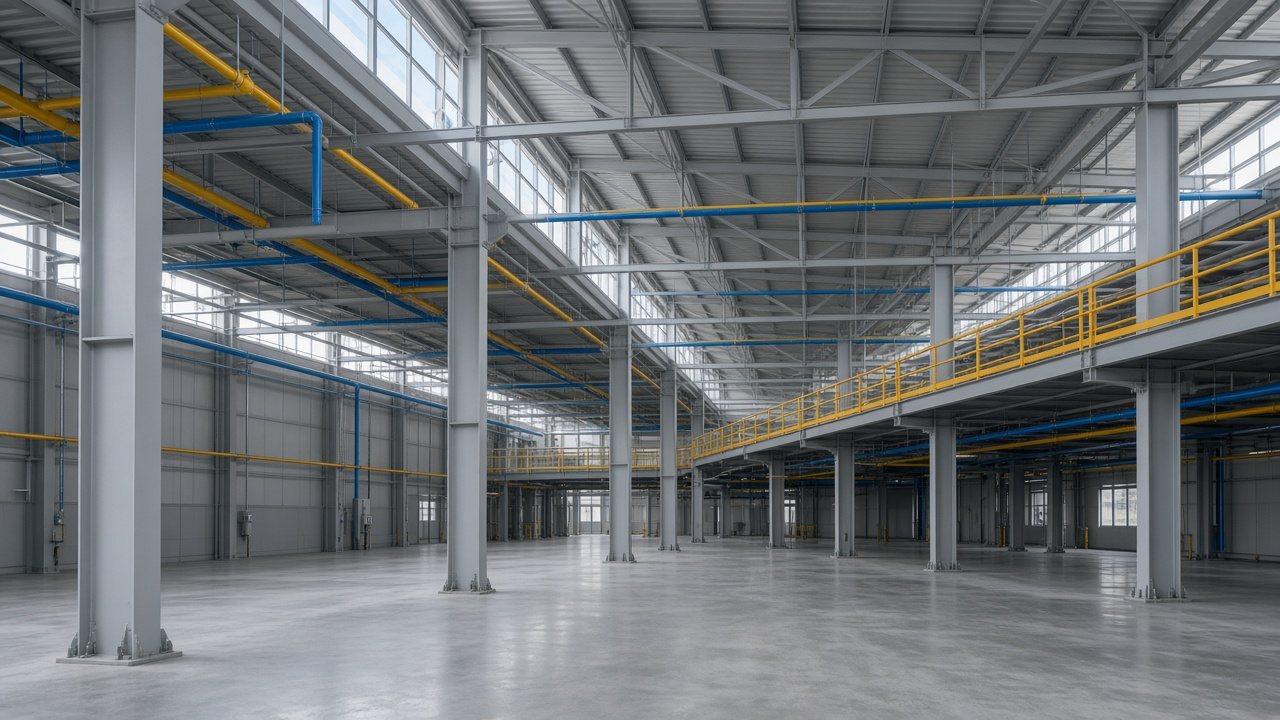
Painting inside an operating plant in Kansas City works when the job is split into zones and shifts: one isolated area is painted at a time after hours or over a holiday shutdown, the floors and equipment in it are covered first, and it is handed back clean before production restarts.
Split the plant into zones before anyone paints
The first planning step is a floor plan, not a paint color. Walk the plant and divide it into areas that can be closed off and released on their own: a bay, one side of a line, a mezzanine, a run of overhead piping. Each zone should be small enough to prepare, paint and clean within the hours available, and its edges should fall where the plant can put up a barrier without blocking an exit or a route that production needs.
Then set the order. Overhead work usually comes before walls and equipment below it, so drips and dust do not land on finished surfaces. Areas that must be back in service first get painted first. A zone plan written down before the first shift saves argument at two in the morning.
Pick the hours: after the shift or over a holiday shutdown
Plant painting is scheduled for when the area is idle. We work after hours and over holidays to fit the plant's hours, and the crew size is matched to the building and the schedule, so a short overnight window and a long holiday shutdown are planned differently. Tell the painting contractor which shifts run, which areas go quiet when, and which holiday dates the plant can release. The industrial plant painting page explains how this works on a full plant job.
Lock out and cover equipment before paint goes on
Machines hold energy even when they are not running. OSHA's overview of hazardous energy names electrical, mechanical, hydraulic, pneumatic, chemical and thermal sources, and warns that the unexpected startup or release of stored energy during servicing and maintenance can seriously injure or kill a worker. Its standard, 29 CFR 1910.147, puts the responsibility for protecting workers from that energy on the employer. In practice, equipment in a paint zone should be shut down and controlled under the plant's own energy control procedure before anyone works on or around it.
Once equipment is down, it gets covered. Floors, fixtures and equipment in the zone are protected before any paint is opened, and tools and materials stay inside the active area. The structural steel and equipment painting page covers painting the machines themselves.
Contain blasting dust and overspray
When interior work needs blasting, containment is the main job. OSHA's ventilation regulation explains that blasting shatters and pulverizes both the abrasive and the old coating, and the dust it forms contains particles small enough to breathe. OSHA's blasting fact sheet lists the controls: barriers and curtain walls to isolate the work from other workers, exhaust ventilation in containment structures, restricted areas around open blasting, and cleanup with wet methods or HEPA filtered vacuums instead of compressed air. It also advises scheduling blasting when the fewest workers are at the site, which in a plant points to an off-shift or a shutdown. The industrial power washing and sandblasting page covers blasting in detail.
Work overhead from lifts with a clear floor
Ceilings, deck and overhead steel are painted from scissor lifts and boom trucks. OSHA's aerial lift fact sheet lists what to check in the work zone before a lift goes up, and several items apply directly inside a plant: low ceilings and other overhead objects, debris and floor obstructions, and other people working close by. Its hazard list includes objects falling from lifts and contact with ceilings. A clear aisle, product moved back from the zone and no one working underneath make overhead painting both safer and faster.
Tanks, pits and hoppers are confined spaces
Some plant spaces are a different kind of job. OSHA describes a confined space as one with limited means of entry or exit that is not designed for continuous occupancy, and its examples include tanks, vessels, silos, storage bins, hoppers, vaults, pits, equipment housings, ductwork and pipelines. A confined space becomes permit-required when it has certain hazards, such as a hazardous atmosphere or material that could engulf a person. Under 29 CFR 1910.146, the employer evaluates the workplace to decide which spaces are permit-required. If any part of a painting job involves one of those spaces, say so at the start so it can be planned on its own terms.
Food plants: cleanable surfaces and nothing dripping onto product
Food and beverage plants add a layer of rules about the building itself. Under 21 CFR 117.20, floors, walls and ceilings must be built so they can be adequately cleaned, kept clean and kept in good repair, and drip or condensate from fixtures, ducts and pipes must not contaminate food. For meat and poultry establishments, 9 CFR 416.2 requires walls, floors and ceilings of durable materials impervious to moisture, cleaned and sanitized as necessary. The plant's food safety team decides what may be applied, where, and when product can return to the area.
Coating VOCs and the national rule
The US EPA limits the VOC content of architectural coatings through a national rule that places the duty on manufacturers and importers. Industrial maintenance coatings, defined in 40 CFR 59.401 as high performance coatings for surfaces facing extreme conditions, have their own limit in Table 1 to Subpart D of Part 59. A product's stated VOC content is worth checking before a coating is chosen for an occupied building. The coating systems guide explains the category.
Clean up every shift and hand the area back
The end of each shift matters as much as the start. Cleanup happens at the end of every shift, so the area is ready for production when it is handed back. Covers come off equipment that has to run, barriers stay up only where the next shift's work continues, and the plant walks the zone before it restarts.
A plant manager's checklist before the painters arrive
- Areas and order. Which zones, in what order, and which must be back first.
- Hours. Shifts, off-shift windows and holiday shutdown dates the plant can release.
- Equipment. Which machines can be shut down, and for how long.
- Lockout. Who in the plant controls the energy control procedure for each machine.
- Product and materials. What has to be moved out of each zone or covered in place.
- Lift access. Aisle clearance, floor obstructions and overhead clearance for lifts.
- Site rules. The plant's own rules for contractors and visitors, including any confined spaces and food safety requirements.
Operating plant painting questions
Do we have to shut down to paint?
No. The plant is painted in zones during off-shift hours or holiday shutdowns, and only the zone being worked is out of service.
Who is responsible for locking out equipment?
Lockout follows the plant's own energy control procedure, and OSHA's standard puts the duty on employers to protect workers from hazardous energy. Name the person who controls it for each zone before work starts.
Can blasting be done inside a running plant?
Yes, with isolation. OSHA's fact sheet calls for barriers and curtain walls to separate blasting from other workers, and for scheduling it when the fewest people are present.
More guides are on the industrial painting guides page.
Sources
- OSHA Fact Sheet, Protecting Workers from the Hazards of Abrasive Blasting Materials, FS-3697, September 2014, read 2026-11-28
- OSHA, 29 CFR 1910.94, Ventilation, read 2026-11-28
- OSHA, Confined Spaces, Overview, read 2026-11-28
- OSHA, 29 CFR 1910.146, Permit-required confined spaces, read 2026-11-28
- OSHA, Control of Hazardous Energy (Lockout/Tagout), Overview, read 2026-11-28
- OSHA Fact Sheet, Aerial Lifts, April 2011, read 2026-11-28
- 40 CFR 59.401, Definitions, Legal Information Institute copy, read 2026-11-28
- 40 CFR 59.402 and Table 1 to Subpart D of Part 59, Legal Information Institute copy, read 2026-11-28
- US EPA, Architectural Coatings: National Volatile Organic Compounds Emission Standards, last updated March 4, 2026, read 2026-11-28
- 21 CFR 117.20, Plant and grounds, Legal Information Institute copy, read 2026-11-28
- 9 CFR 416.2, Establishment grounds and facilities, Legal Information Institute copy, read 2026-11-28
Plan a painting schedule for your plant
Send the zones, the hours the plant can release and photos of each area through the plant painting quote form, and we will answer with a written quote and a proposed order of work.