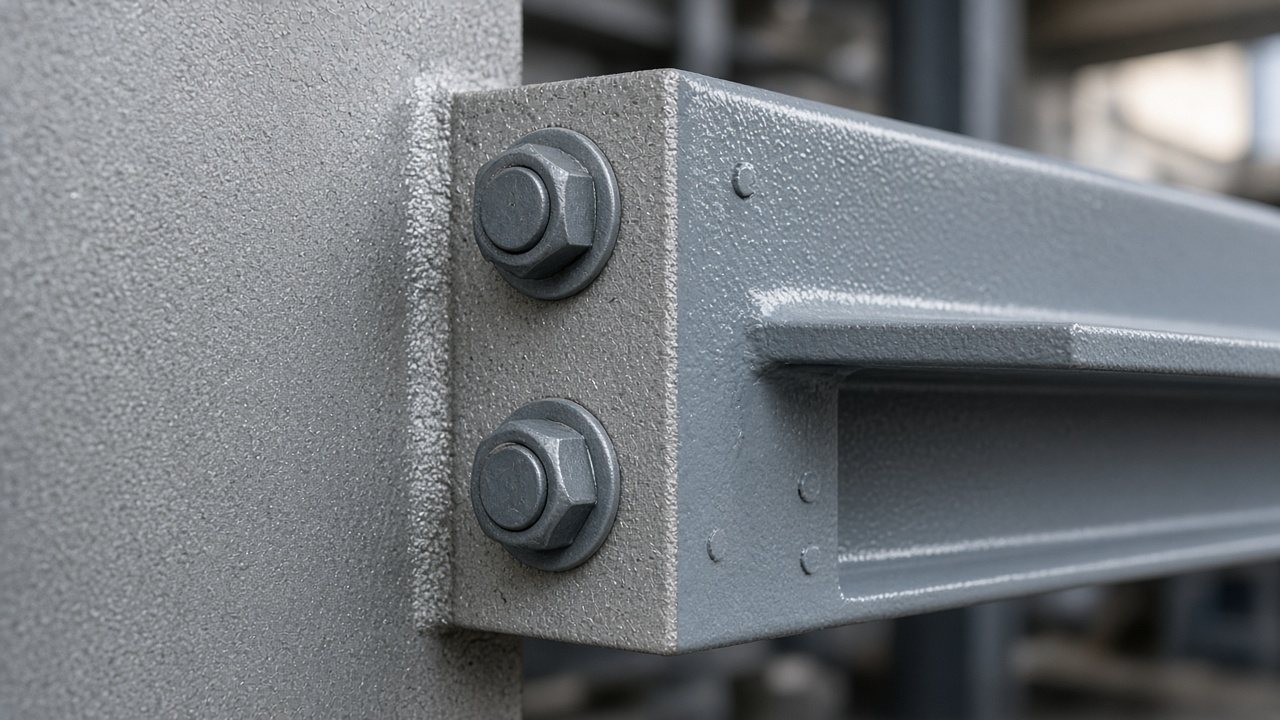
Industrial painting in Kansas City is priced job by job, and five things move the cost most: the surface preparation the coating needs, height and access, the number of coats, the condition of the old paint, and the hours the work can be done. There is no public price list for plant work we can cite, so the nearest published figure is a national one for painting commercial building exteriors, industrial buildings included: Estimate: $2 to $6 per square foot. Preparation, access and the coating system decide what a plant, steel or silo job really costs.
Published national ranges for related painting work
These ranges come from Angi's cost guide for painting a commercial building exterior. That guide covers offices, warehouses, retail buildings, industrial buildings and apartment complexes. It does not price structural steel, equipment, tanks or silos, so read these as general figures for building exteriors, not as a price for that work.
| What the national range covers | National range |
|---|---|
| Commercial exterior painting, per square foot | Estimate: $2 to $6 per square foot |
| Most commercial exterior projects overall | Estimate: $5,500 to $18,500 |
| Labor, per square foot | Estimate: $1.50 to $4 per square foot |
| Epoxy paint, per gallon | Estimate: $50 to $120 per gallon |
| Specialty coating, per gallon | Estimate: $75 to $150 per gallon |
| Professional cleaning or power washing | Estimate: $0.30 to $1 per square foot |
| Repairs before or after painting, such as patching stucco, fixing siding or sealing cracks | Estimate: $500 to $5,000 |
These are national figures from a cost guide, not this business's prices. A written quote for your job is the only number that applies to it.
What moves the price of an industrial painting job
- Surface preparation. Washing, tool cleaning or blasting, and how much of the surface needs each.
- Height and access. Floor-level work, lift work or boom truck work, and how clear the area is.
- Number of coats and the coating system. One, two or three coats, chosen for the exposure.
- The old coating. Whether it is sound enough to clean and overcoat or has to come off, and whether it may contain lead.
- Working hours and containment. Normal hours, nights, holidays or shutdowns, and whether blasting has to be enclosed.
The sections below explain each one. The home page gives an overview of the kinds of industrial work we take on.
How surface preparation moves the price
The written preparation standards run from solvent cleaning and hand or power tool cleaning, which remove oil and loose material, up to near-white and white metal blast cleaning, which remove essentially all rust, scale and old coating. The surface preparation standards guide explains each grade. Each step up the scale is more work per square foot, and blasting brings containment and cleanup with it.
The cost guide behind the ranges above lists power washing, scraping, caulking, patching, priming and masking as preparation, and it prices cleaning and repairs as their own lines. That is a useful reminder that preparation is a real share of any painting price, even on a plain building wall.
Skipping preparation does not save money for long. A Federal Highway Administration study of bridge steel calls surface preparation an integral step and links premature coating failure to a poorly prepared substrate. The same study stated its aim as finding coatings that last longer with minimal surface preparation at a much reduced cost. The industrial power washing and sandblasting page covers the work itself.
Number of coats and the coating system
More coats mean more labor and material. The federal bridge study notes that the cost of coating application can be significantly reduced with one- or two-coat systems, which also save time and space. In that same study, though, the three-coat systems performed better than the one- and two-coat systems in both accelerated and outdoor exposure.
The exposure decides the system. Federal rules describe industrial maintenance coatings as built for conditions such as immersion, corrosive agents, repeated high heat, heavy abrasion and outdoor exposure of metal structures (40 CFR 59.401). Steel over a wash line needs a different system than steel in a dry, heated room. Material cost follows the system too: in the national ranges above, epoxy and specialty coatings sit well above ordinary paint per gallon. The coating systems guide explains how the layers work.
Height, access and lifts
Work that can be reached from the floor is the least expensive to reach. Ceilings, roof deck, overhead steel and silo shells need scissor lifts or boom trucks, and every lift setup needs a checked work zone. OSHA's aerial lift fact sheet lists what to check: ceiling height, floor obstructions, overhead power lines, wind and people nearby. Tight aisles, equipment that cannot be moved and tall structures all add time. The national cost guide makes the same point about building exteriors: lifts or scaffolding raise the cost of work on taller, multi-story buildings. The structural steel and equipment painting page covers lift work around plant steel.
Working hours, shutdowns and containment
Plant work is scheduled after hours or over holidays so production keeps running, and the crew size is matched to the building and the schedule. Off-shift work, protecting floors, fixtures and equipment before each shift, and cleaning up at the end of each shift are all labor, and the quote prices them in. The national cost guide also notes that after-hours or overtime work can raise the total, and that permit and inspection fees can apply on some jobs.
Blasting inside a plant adds containment. OSHA's fact sheet lists barriers and curtain walls, exhaust ventilation in containment structures and wet or HEPA vacuum cleanup among the controls, and each of those takes setup time. The industrial plant painting page explains how this works in a running plant.
Old coatings and lead
A coating that is still tightly bonded can often be cleaned, scuffed or brush-off blasted and overcoated. One written standard, brush-off blast cleaning, exists to keep as much sound coating as possible. A failed coating that has to come off entirely moves the job up the preparation scale.
Old lead paint changes the job again. OSHA's construction lead standard covers painting work where a worker may be exposed to lead, and its blasting fact sheet says removing lead paint by abrasive blasting will likely require following that standard. Tell us what is known about the old coating before the job is priced.
Silos and bins: what adds cost
Silos combine several cost drivers at once. They are tall, so they are reached with boom trucks. Lift work stops in winds above the lift maker's limit and keeps clear of power lines, so weather days are part of the plan. The national cost guide notes that weather delays can raise labor and equipment rental costs. And grain sites run their own safety programs: OSHA calls grain handling a high hazard industry, and its grain handling rule requires housekeeping programs and permits that shape when and how work happens on site. The silo painting page covers silo work in full.
What a written industrial painting quote should list
A quote you can compare should spell out:
- Every surface included, and what is excluded
- The preparation for each surface, by name or standard
- The coating system and the number of coats
- The working hours and any shutdown dates
- How floors, fixtures and equipment are protected, and how cleanup is handled
- The access equipment: lifts, boom trucks or other
- Anything the plant must provide, such as lockout or cleared aisles
Industrial painting cost questions
Why does this page show national ranges and not a local price list?
Every industrial job is priced from its own surfaces, preparation and access. The only published figures we could cite are national ranges for painting commercial building exteriors. They are a useful starting point, but a plant ceiling, a pipe rack and a silo have little in common on a price sheet.
Do the published ranges apply to steel, equipment or silos?
Not directly. The cost guide behind them covers commercial building exteriors. Steel, equipment and silo work usually needs more preparation, more access equipment and a coating chosen for the exposure, and each of those is priced in the written quote.
How often does an industrial building need repainting?
It depends on the coating and the exposure. For commercial building exteriors, the national cost guide suggests touch-ups every two to five years as routine maintenance. Steel in harsh service is judged by its own condition.
Is it cheaper to paint over the old coating?
At first, yes. Less preparation is less labor. It only holds if the old coating is still stuck, and a federal bridge study notes that adhesion is frequently considered the most prominent requirement for a corrosion-resistant coating. Paint over a failing film fails with it.
Do fewer coats cost less?
Yes, to apply. The federal bridge study says one- and two-coat systems can significantly reduce application cost, and the same study found the three-coat systems protected best.
Does night or holiday work cost more?
It can. Off-shift and holiday hours are labor, and the quote shows how they are priced.
Sources
- Angi, How Much Does It Cost to Paint a Commercial Building Exterior? [2026 Data], page updated Oct 26, 2026, read 2026-11-28. National figures, not this business's prices.
- OSHA Fact Sheet, Protecting Workers from the Hazards of Abrasive Blasting Materials, FS-3697, September 2014, read 2026-11-28
- OSHA, 29 CFR 1926.62, Lead, read 2026-11-28
- OSHA, Grain Handling, Overview, read 2026-11-28
- OSHA, 29 CFR 1910.272, Grain Handling Facilities, read 2026-11-28
- OSHA Fact Sheet, Aerial Lifts, April 2011, read 2026-11-28
- American Galvanizers Association, SSPC Surface Preparation Standards, April 30, 2014, updated 2025, read 2026-11-28
- Federal Highway Administration, Coating Performance on Existing Steel Bridge Superstructures, FHWA-HRT-20-065, September 2020, read 2026-11-28
- 40 CFR 59.401, Definitions, Legal Information Institute copy, read 2026-11-28
Get a written price for your job
Send photos, the surfaces involved, what they are exposed to and the hours the work can be done through the industrial painting quote form for a written quote built on the items above.