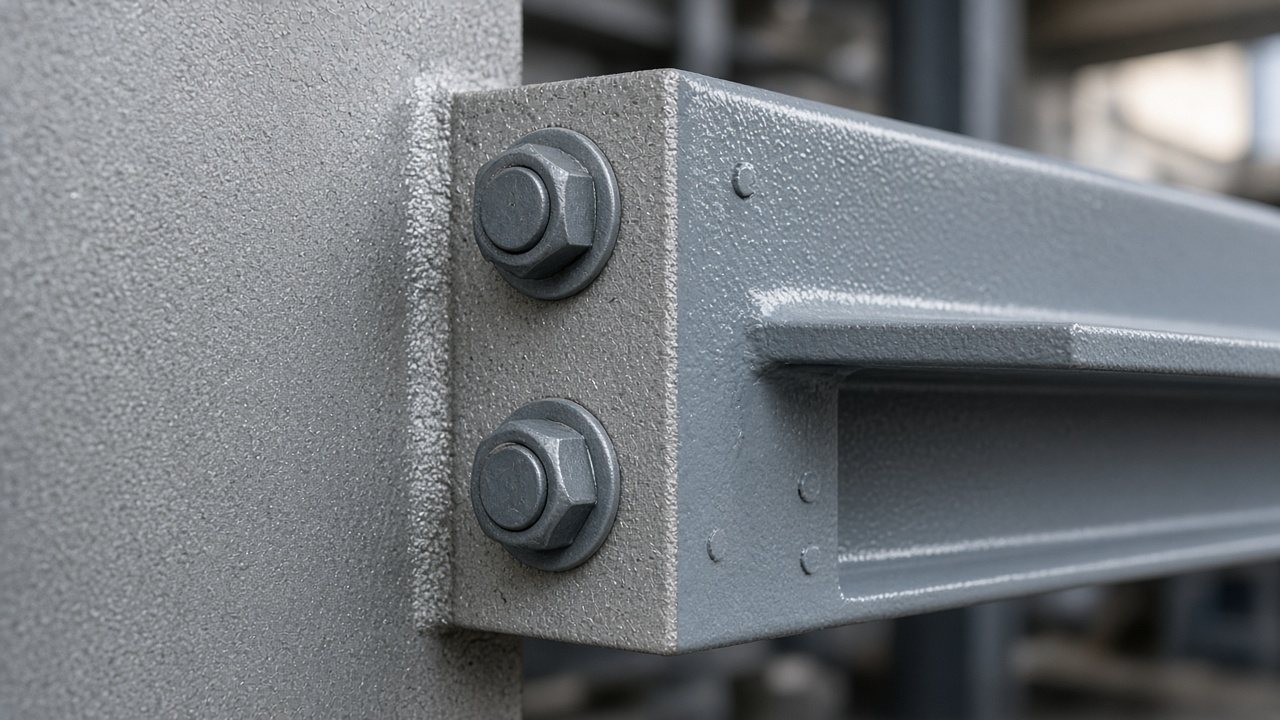
We paint structural steel and plant equipment in Kansas City, including beams, columns, mezzanines, pipe racks, piping and machinery, and we clean or blast the metal first so the coating bonds to steel instead of to rust or loose paint.
Steel and equipment we coat
This service covers the bare and painted metal that holds a plant up and keeps it running. The kinds of surfaces it takes in:
- Beams, columns, joists and trusses
- Mezzanines, platforms and stairs
- Handrail and guardrail
- Pipe racks and process piping
- Tank exteriors
- Machinery housings and guards
- Bollards and other protective steel
Some of that steel sits indoors in a dry room, and some sits outside or over a wash line. The exposure decides the coating, so it is the first thing a quote asks about. If the job is mostly walls, ceilings and roof deck in a working plant, the industrial plant painting page is the better fit.
Why bare and rusting steel needs a coating
NASA's corrosion laboratory defines corrosion as the degradation of a metal through a reaction with its environment. Iron is processed from ore into a metal that is unstable in its environment, so it tends to revert to a more stable mineral form. Rust is that process at work.
A Federal Highway Administration study of bridge steel adds the two things that drive it: steel corrodes when exposed to moisture and oxygen, and salts speed the process up a great deal. Washdown water, outdoor weather and road salt carried in on trucks all bring those ingredients into a plant.
NASA notes that most large metal structures are made from carbon steel, which it calls the world's most useful structural material because it is inexpensive, readily available and easily formed. A coating is what keeps water and oxygen off it.
Cleaning steel before it is painted
Steel preparation comes in three broad levels:
- Remove oil and grease. Solvent cleaning takes off oil, grease, cutting compounds and other soluble contamination that blasting and brushing would only smear around.
- Remove what is loose. Hand tool and power tool cleaning take off loose rust, loose mill scale and loose paint, and leave material that is still tightly bonded.
- Blast to clean metal. Abrasive blasting can take steel down to bare metal, with the cleanest grades removing all visible rust, scale and old coating.
The point of all three, in the federal bridge study's words, is to remove contaminants and create a specific roughness so the coating can contact and adhere to the steel. Which level a job gets is set by the coating's data sheet or the job specification. The surface preparation page covers how that work is done in a plant, and the surface preparation standards guide explains each written grade.
Primer, intermediate coat and topcoat on steel
Protective coatings for steel are usually built in layers. In the three-coat system the federal study describes as typical for steel bridges, each layer has one job:
- Primer. A zinc-rich primer on blast-cleaned steel. Zinc is more reactive than iron, so it corrodes first and protects the steel underneath.
- Intermediate coat. Usually an epoxy, acting as a barrier over the primer.
- Topcoat. Shields the lower layers from ultraviolet light and gives the finished appearance.
Federal rules have a name for the coatings built for this kind of duty. An industrial maintenance coating, as 40 CFR 59.401 defines it, is a high performance coating for surfaces exposed to one or more extreme conditions: immersion in water or chemicals, corrosive agents, repeated temperatures above 250 °F, repeated heavy abrasion, or outdoor exposure of metal structures. Plant steel can hit several of those at once. The coating systems guide covers how a system is matched to those conditions.
Edges, welds, bolts and crevices: where rust starts
Rust on a painted frame rarely starts in the middle of a flat flange. It starts at the edges, the welds and the bolt heads.
The federal bridge study is a good illustration. Its test panels were stripe painted at edges, welds, bolts and nuts, meaning those spots got an extra brushed coat before the full coat went on. The larger panels carried welded and bolted attachments so the researchers could see how coatings behave at crevices and interfaces, and on one system's panels, the film on a V-shaped welded attachment measured thinner than on other parts of the panel.
The trade reason is simple. Wet paint pulls away from a sharp edge as it dries, so the film there ends up thin. Bolt threads, weld spatter and the gap between two plates are hard to reach with a spray fan and easy to miss with a roller. Crevices hold water. Those are the spots a careful crew brushes first and checks last. The guide to why industrial coatings fail explains what happens when they are missed.
Painting equipment and piping around production
Equipment and process piping are usually painted where they stand, which means working around a plant that is still running. We work after hours and over holidays to fit the plant's hours. Floors, fixtures and nearby equipment are covered before work starts, tools and materials stay inside the active area, and the area is cleaned at the end of each shift.
Machines store energy. OSHA's page on the control of hazardous energy names electrical, mechanical, hydraulic, pneumatic, chemical and thermal sources, and warns that unexpected startup or release of stored energy during servicing and maintenance can seriously injure or kill a worker. OSHA's standard puts the duty to protect workers from that energy on the employer. For a painting quote, that means we need to know which equipment can be shut down, for how long and on which shifts, and who in the plant controls it.
Safety colors on guards, stops and hazards
Equipment painting often includes the hazard colors. OSHA's rule at 29 CFR 1910.144 sets two of them:
- Red is the basic color for danger and stop. Danger signs are painted red, and emergency stop bars, buttons and switches on hazardous machines are red.
- Yellow is the basic color for caution and for marking physical hazards such as striking against, stumbling, falling, tripping and caught in between.
Those are the only two colors that rule covers. Anything past red and yellow, such as pipe identification colors, follows the plant's own color standard, so send it with the quote request.
Old paint that may contain lead
Older plant steel may carry lead paint. OSHA notes that lead was used extensively as a corrosion inhibitor and pigment in paints. Its construction lead standard, 29 CFR 1926.62, applies to construction work where a worker may be exposed to lead, and painting is part of its definition of construction work. OSHA's blasting fact sheet adds that removing lead paint by abrasive blasting will likely bring that standard into the job.
So before steel is priced, tell us what is known about the old coating: its age, any test results and any earlier work. It changes how the job is planned.
Reaching high steel with lifts and boom trucks
Overhead steel, pipe racks and tall equipment are reached with scissor lifts and boom trucks. OSHA's aerial lift fact sheet describes an aerial lift as a vehicle-mounted device used to raise people, such as a boom platform, and notes that lifts have replaced ladders and scaffolding on many job sites. The same sheet lists what to look for in the work zone, and inside a plant the ones that matter most are low ceilings and overhead objects, debris and floor obstructions, overhead power lines and other people working close by.
Steel and equipment painting questions
Does rusted steel have to be sandblasted before painting?
Not always. The tool cleaning standards remove loose rust and loose paint with hand or power tools, while the blast standards take steel down to clean metal. The coating's data sheet or the job specification decides which one the steel needs.
Can you paint over the existing coating?
Sometimes. One blast standard, brush-off blast cleaning, exists to keep as much sound, tightly bonded coating as possible and roughen it for the next coat. It only works if the old paint is still stuck, and adhesion is frequently considered the most prominent requirement for a corrosion-resistant coating, so we look at the old film before saying yes.
Which colors mark hazards and emergency stops?
Red and yellow. Under OSHA's rule, red marks danger and stop, including emergency stop bars, buttons and switches, and yellow marks caution and physical hazards such as tripping and caught-in-between points.
Can equipment be painted in place?
Yes, when it can be shut down, cleaned and masked. That is why the quote asks which machines can come down, for how long, and during which shifts.
What a steel job costs depends mostly on preparation and access. The industrial painting cost page explains how each factor moves a quote.
Sources
- OSHA Fact Sheet, Protecting Workers from the Hazards of Abrasive Blasting Materials, FS-3697, September 2014, read 2026-11-28
- OSHA, Lead, Overview, read 2026-11-28
- OSHA, 29 CFR 1926.62, Lead, read 2026-11-28
- OSHA, Control of Hazardous Energy (Lockout/Tagout), Overview, read 2026-11-28
- OSHA, 29 CFR 1910.144, Safety color code for marking physical hazards, read 2026-11-28
- OSHA Fact Sheet, Aerial Lifts, April 2011, read 2026-11-28
- American Galvanizers Association, SSPC Surface Preparation Standards, April 30, 2014, updated 2025, read 2026-11-28
- Federal Highway Administration, Coating Performance on Existing Steel Bridge Superstructures, FHWA-HRT-20-065, September 2020, read 2026-11-28
- NASA Kennedy Space Center, Corrosion Fundamentals, read 2026-11-28
- NASA Kennedy Space Center, Corrosion Control, read 2026-11-28
- 40 CFR 59.401, Definitions, Legal Information Institute copy, read 2026-11-28
Get a quote for steel or equipment painting
Send wide photos of the steel or equipment, close photos of the worst rust, what the metal is exposed to and when it can be shut down, through the steel and equipment painting quote form.