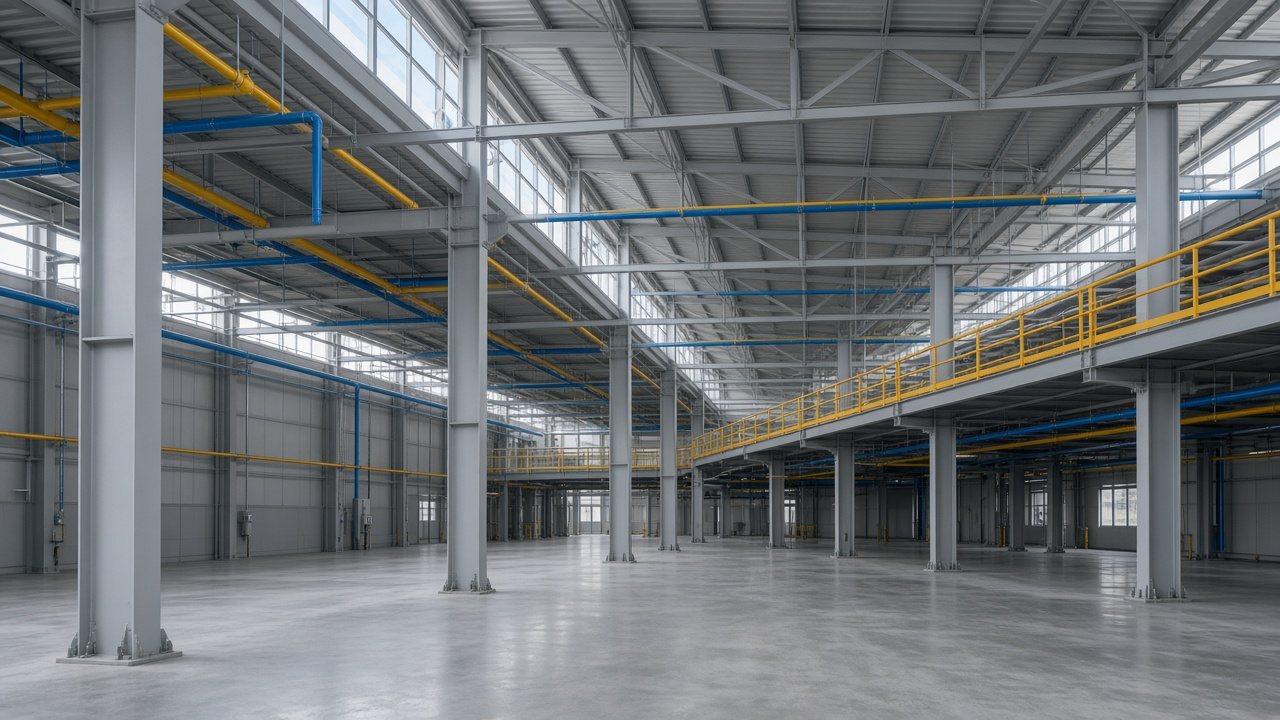
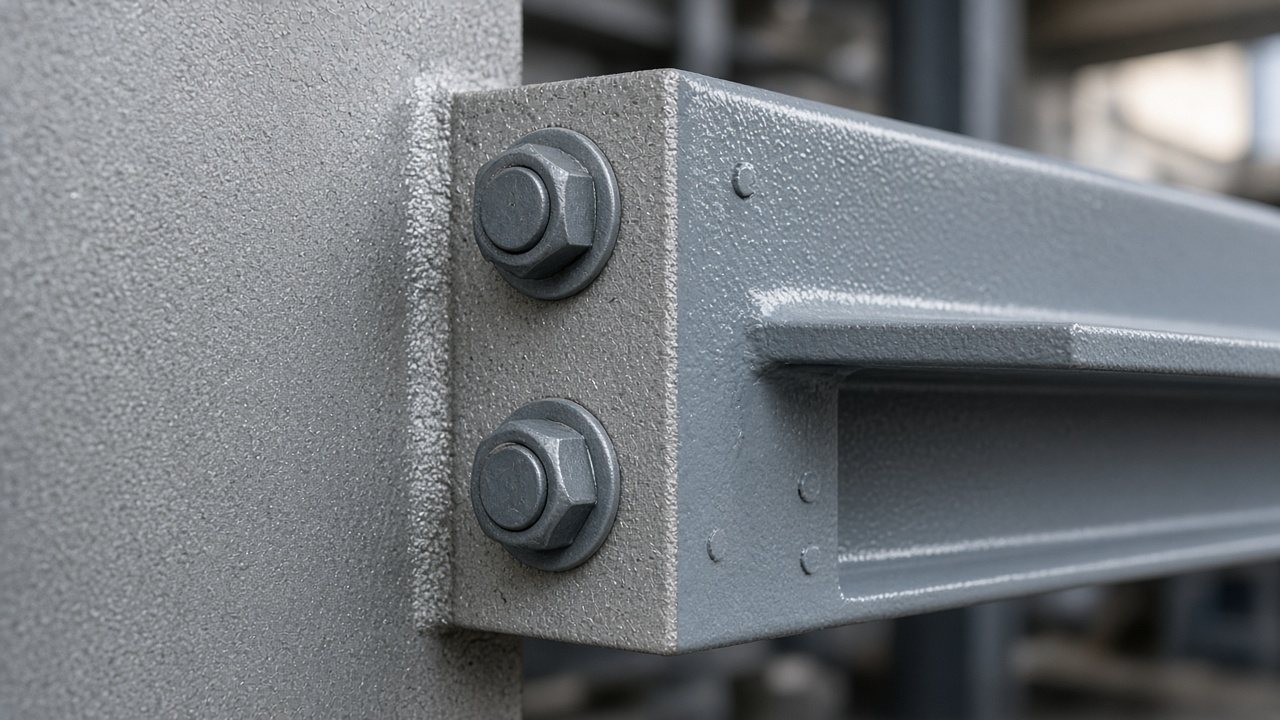
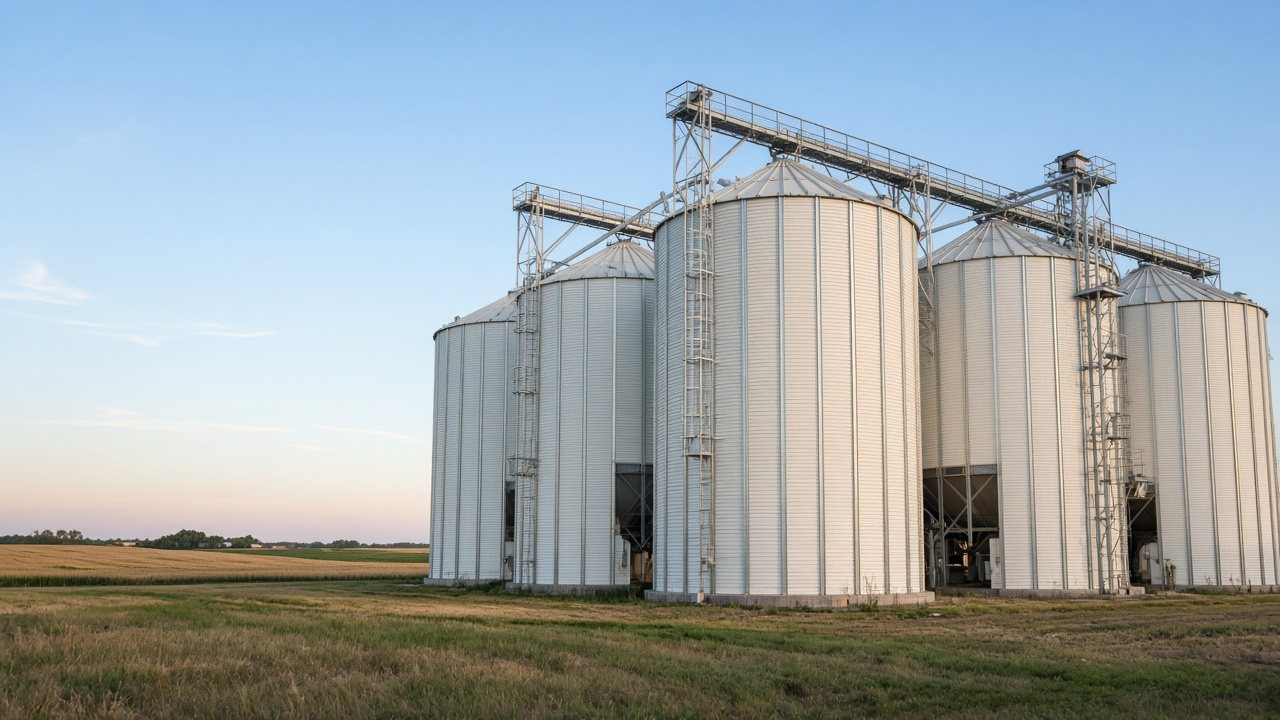
What we paint: steel, equipment, plant interiors and silos
Most industrial painting jobs fall into one of four kinds of work. Each has its own page that explains how the job is prepared, coated and scheduled.
- Structural steel and equipment. Beams, columns, mezzanines, stairs, pipe racks, piping, tank exteriors and machinery housings. See structural steel and equipment painting.
- Production plants, inside and out. Ceilings and roof deck, walls, overhead steel, process piping and exterior metal siding, painted in zones so the lines keep running. See industrial plant painting.
- Silos and bins. Steel and concrete shells, roofs, ladders and catwalks, washed or blasted and then coated from boom trucks and lifts. See silo and bin painting.
- Surface preparation. Power washing, solvent and tool cleaning, and abrasive blasting, done as the first step of a coating job. See industrial power washing and sandblasting.
Surface preparation comes before any coating
A coating is only as good as the surface under it. Preparation has two jobs: take off whatever would keep the coating from touching the metal (oil, dirt, salts, rust, loose paint) and leave a roughened surface the new coat can grip. A Federal Highway Administration study of bridge steel calls surface preparation an integral step and ties premature coating failure to a substrate that was not properly prepared, and it notes that abrasive blast cleaning does both jobs at once.
Abrasive blasting, as OSHA's fact sheet describes it, uses compressed air or water to drive a high velocity stream of abrasive at a surface, and one of its listed uses is to prepare a surface for paint or another coating. Not every surface needs it. The written surface preparation standards run from solvent cleaning and hand or power tool cleaning up to blast cleaning to bare metal, and the coating's data sheet or the job specification names the grade. Our surface preparation page covers the work itself, and the surface preparation standards guide explains what each grade means.
How a coating system protects steel
Steel rusts because it reacts with its surroundings. The federal bridge study puts it plainly: steel corrodes when it is exposed to moisture and oxygen, and salts speed that up a great deal. A coating system slows corrosion by keeping water, oxygen and salts away from the metal.
Industrial coatings are usually built in layers, and each layer has its own job. In the system that study describes as typical for steel bridges, a zinc-rich primer goes on the blast-cleaned steel and protects it by corroding in place of the iron, an intermediate coat, usually an epoxy, acts as a barrier over the primer, and the topcoat shields the layers underneath from sunlight and gives the finished look. The coating systems guide walks through each layer and why film thickness matters.
Painting around production: after hours and holidays
A plant rarely has a good week to stop. We work after hours and over holidays to fit the plant's hours, and the crew size is matched to the building and the schedule rather than to a fixed number.
Before any paint is opened, floors, fixtures and equipment in the work area are covered. Tools and materials stay inside the active area instead of spreading across the floor, and the area is cleaned up at the end of each shift so the next production shift walks into a clean space. The plant painting page covers this in detail, and the guide to painting inside an operating plant lays out how a job is split into zones.
Lifts and boom trucks for high steel and silos
High ceilings, roof deck, overhead pipe and silo shells are reached with scissor lifts and boom trucks. Before a lift goes up, the work zone is checked for the hazards OSHA's aerial lift fact sheet lists: ceiling height, debris and floor obstructions, overhead power lines and other people working close by. That is why a clear aisle and a known power line location speed up a quote and a job. The silo painting page explains how this works on a tall structure outdoors.
Who does the work
Every job is done by our painting crew. Crews wear company shirts in safety colors, so plant staff can tell at a glance who belongs in the work zone. More on how a job runs is on the about page.
What industrial painting costs
The price of an industrial painting job is set mostly by the surface preparation the coating needs, the height and access, the number of coats, the condition of the old paint and the hours the work can be done. The industrial painting cost page explains how each of those moves a quote, without a price list.
Related work we also take on
Our painting crew also takes on warehouse painting. Epoxy floor coatings are part of the same crew's work. Stucco and EIFS application and repair is related work as well. Waterproofing and caulking are done on plant exteriors where open joints would let water in behind a new coating.
Where we work in the Kansas City metro
We work across the Kansas City metro: Kansas City, Kansas, Kansas City, Missouri and the surrounding metro. If your site is in another metro city, name it in the quote form. The service area page has the details.
Industrial painting questions
Can you paint while our plant keeps running?
Yes. The work is scheduled after hours or over holidays to fit the plant's hours, and only one protected area is worked at a time. The guide to painting inside an operating plant shows how the zones and shifts are planned.
Do you sandblast, or only power wash?
Both. Which one a job gets depends on the condition of the old coating and on what the new coating's data sheet or the job specification calls for, because the preparation standards run from tool cleaning up to blast cleaning to bare metal. The surface preparation page explains when washing is enough and when it is not.
What should we send to get a quote?
Photos of the steel, equipment, plant area or silo, a rough size, what the surface is exposed to (weather, washdown, heat or chemicals) and the hours the work can be done. Send them through the quote page.
More answers are on the industrial painting FAQ, and longer explanations are in the industrial painting guides.
Sources
- OSHA Fact Sheet, Protecting Workers from the Hazards of Abrasive Blasting Materials, FS-3697, September 2014, read 2026-11-28
- OSHA Fact Sheet, Aerial Lifts, April 2011, read 2026-11-28
- American Galvanizers Association, SSPC Surface Preparation Standards, April 30, 2014, updated 2025, read 2026-11-28
- Federal Highway Administration, Coating Performance on Existing Steel Bridge Superstructures, FHWA-HRT-20-065, September 2020, read 2026-11-28
Get a quote for your plant, steel or silo
Send photos and a few details through the industrial painting quote form, and we will answer with a written quote or with questions if the photos do not show enough.