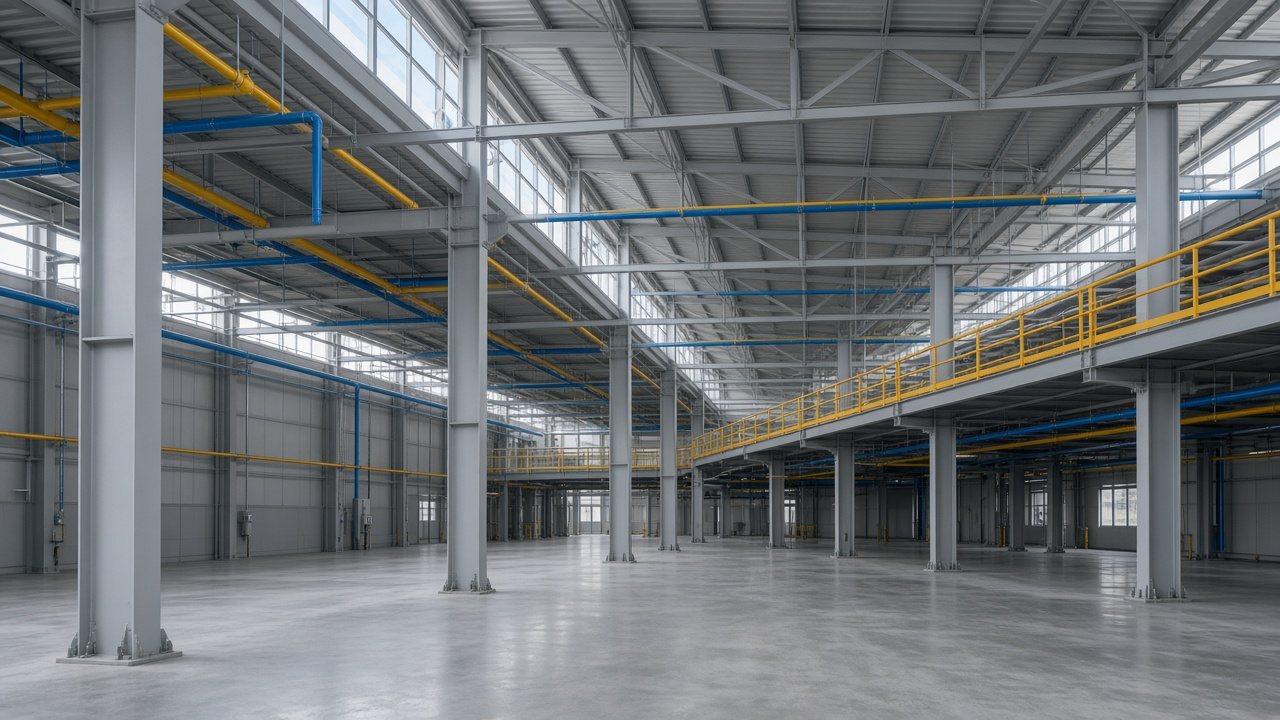
We paint industrial plants in Kansas City, inside and out, covering ceilings and roof deck, walls, structural steel, piping and equipment, and we schedule the work after hours or over holidays so production keeps running.
Plant areas we paint
A plant painting job usually covers more than one kind of surface. The areas this service takes in:
- Overhead. Ceilings, exposed roof deck, joists and the steel that carries them.
- Walls. Concrete block, poured concrete and metal panel walls in production and process areas.
- Steel and piping. Columns, process piping and the equipment along the lines. The structural steel and equipment painting page goes deeper on that metal.
- Exterior. Outside walls, metal siding and trim.
We apply both interior and exterior coatings, so one plan can carry a job from the roof deck inside to the siding outside.
Scheduling around shifts, shutdowns and holidays
The schedule is built around the plant, not the other way around. We work after hours and over holidays to fit the plant's hours, and the crew size is matched to the building and the schedule. A small area over one off-shift needs a different crew than a full production hall over a holiday shutdown.
The usual pattern is to split the plant into areas that can be closed off one at a time, paint each one when that area is idle, and hand it back before the next shift starts. The guide to painting inside an operating plant walks through how those zones and shifts are planned.
Protecting floors, fixtures and equipment before work starts
Nothing is painted until the area around it is covered. Floors, fixtures and equipment in the work zone are protected first. Tools, paint and materials stay inside the active area rather than spreading down the aisle, and the area is cleaned up at the end of each shift. When the next crew of plant staff arrives, the line they run should look the way they left it, apart from fresh paint overhead.
Keeping dust and overspray inside the work zone
When a job needs abrasive blasting indoors, containment becomes the main concern. OSHA's regulation on ventilation explains why: blasting shatters and pulverizes both the abrasive and the old coating on the surface, and the dust it forms includes particles small enough to breathe.
OSHA's fact sheet on abrasive blasting lists the controls. Barriers and curtain walls isolate the blasting from other workers. Exhaust ventilation in a containment structure captures dust. Cleanup is done with wet methods or HEPA filtered vacuums rather than compressed air. And the sheet advises scheduling blasting when the fewest workers are at the site, which in a plant usually means an off-shift or a shutdown. The surface preparation page covers blasting and washing in full.
Ceilings, deck and overhead steel from lifts
Ceilings, roof deck and overhead steel are painted from scissor lifts and boom trucks. OSHA's aerial lift fact sheet lists the work zone checks that matter indoors: ceiling height and other overhead objects, debris and floor obstructions, and other people working close by. Clear aisles, product moved back from the work zone and pallets out of the lift's path make overhead work safer and faster, and they are worth planning before the first shift.
Walls and ceilings in food and beverage plants
Food and beverage plants have their own federal building rules. Under 21 CFR 117.20, a food plant must be built so that floors, walls and ceilings can be adequately cleaned, kept clean and kept in good repair, and so that drip or condensate from fixtures, ducts and pipes does not contaminate food. For meat and poultry establishments, 9 CFR 416.2 calls for walls, floors and ceilings built of durable materials impervious to moisture, cleaned and sanitized as necessary.
Those rules describe the result, a surface that holds up to cleaning and stays in repair. They do not name a coating. The plant's food safety team decides what may be applied, where and when. If your site is a food or beverage plant, say so in the quote form so those rules are part of the plan from the start.
VOC limits on industrial coatings
The US EPA's national rule for architectural coatings limits their content of volatile organic compounds (VOCs) by placing the duty on manufacturers and importers. It rests on a determination that VOC emissions from these coatings can cause or contribute to ozone levels that violate national air quality standards. Industrial maintenance coatings have their own category under that rule, and Table 1 to Subpart D of Part 59, as published, sets their limit at 450 grams of VOC per liter. A product's stated VOC content is worth checking before a coating is chosen for an occupied plant. The coating systems guide explains the industrial maintenance category.
Exterior plant walls, metal siding and trim
Outside, the plant's walls, metal siding and trim are power washed first to take off dirt and loose, chalky paint, then coated with an exterior system suited to the surface. Waterproofing and caulking go with that work: open joints, gaps at penetrations and failed sealant let water in behind a new coating, so they are dealt with before the topcoat goes on. Epoxy floor coatings are related work we also take on.
Plant painting questions
Can you paint a plant without shutting it down?
Yes. The plant is painted one isolated area at a time, outside production hours, and each area is handed back clean. The guide to painting inside an operating plant shows how the zones are set.
Do you work nights and holidays?
Yes. After-hours and holiday work is how we fit plant painting around production. Tell us the hours and dates the plant can release in the quote form.
How do you keep paint off our equipment and product?
By covering floors, fixtures and equipment before work starts and keeping tools and materials inside the active area. Product and anything that cannot be covered is best moved out of the zone before the shift begins.
What do food plant rules say about walls and ceilings?
They must be cleanable and kept in good repair. Federal food rules also bar drip or condensate from fixtures, ducts and pipes onto food, and meat and poultry rules call for walls and ceilings of durable materials impervious to moisture.
More answers are on the industrial painting FAQ, and the industrial painting cost page explains what moves the price of a plant job.
Sources
- OSHA Fact Sheet, Protecting Workers from the Hazards of Abrasive Blasting Materials, FS-3697, September 2014, read 2026-11-28
- OSHA, 29 CFR 1910.94, Ventilation, read 2026-11-28
- OSHA Fact Sheet, Aerial Lifts, April 2011, read 2026-11-28
- 40 CFR 59.401, Definitions, Legal Information Institute copy, read 2026-11-28
- 40 CFR 59.402 and Table 1 to Subpart D of Part 59, Legal Information Institute copy, read 2026-11-28
- US EPA, Architectural Coatings: National Volatile Organic Compounds Emission Standards, last updated March 4, 2026, read 2026-11-28
- 21 CFR 117.20, Plant and grounds, Legal Information Institute copy, read 2026-11-28
- 9 CFR 416.2, Establishment grounds and facilities, Legal Information Institute copy, read 2026-11-28
Get a quote for plant painting
Send photos of each area, the surfaces involved and the hours the plant can release through the plant painting quote form.